Unplanned downtime caused by the failure of a single consumable component costs fleets thousands of dollars per hour in lost productivity. Maintenance directors and procurement officers constantly battle to balance upfront part costs with actual field longevity. The current market floods buyers with varying metallurgical qualities, counterfeit components, and complex fitment requirements. Treating these components as simple commodities guarantees catastrophic equipment failure. This guide categorizes the most critical consumable components used across earthmoving and excavation sectors. We provide a technical framework for evaluating material specifications. You will also find strict criteria for selecting reliable suppliers to optimize your overall operational efficiency and keep machines running predictably.
Predictability over Price: The true value of wear parts is measured in predictable hours of operation, making lifecycle cost the only viable metric for procurement.
Application Dictates Material: Selecting between high-hardness and high-toughness materials depends entirely on the specific abrasion and impact levels of the job site.
Exact Fitment is Non-Negotiable: Knowing your equipment's exact specifications, serial numbers, and part manuals is essential to avoid purchasing incompatible components that cause premature wear.
Supplier Vetting is Critical: Partnering with a vetted heavy equipment wear parts supplier mitigates the risks of supply chain bottlenecks and substandard metallurgy that lead to catastrophic equipment failure.
Proactive Replacement: Tracking component lifecycles and replacing wear plates, teeth, and undercarriage parts before they damage structural components saves significant capital.
The Financial Impact of Heavy Equipment Wear Parts on Fleet Operations
Successful fleet management requires transitioning from reactive, run-to-failure replacements to predictive maintenance schedules. Baseline success means knowing exactly when a component will fail and replacing it just before it compromises the host machine. Reactive maintenance models drain operational budgets. When a machine breaks down mid-shift, operators sit idle, expedited shipping fees accumulate, and mechanics are forced into emergency field repairs. Predictive management stabilizes these variables by scheduling replacements during planned downtime.
The Cost of Deferred Maintenance
Running worn components forces the entire machine to overcompensate. Bald undercarriage sprockets cause track chains to slip and jump. This slipping sends massive shockwaves through the final drive, destroying planetary gears and seals. Blunt cutting edges force the machine's engine and hydraulics to work significantly harder to penetrate the ground. This resistance increases fuel consumption rapidly. It also elevates hydraulic fluid temperatures, which degrades O-rings, cylinder seals, and main pumps.
Delaying the replacement of a simple consumable part accelerates the degradation of primary structural assets. A worn bucket lip will eventually crack the bucket's structural welds. Repairing structural welds requires days of hot work, gouging, and re-welding in the shop. Replacing a bolt-on edge takes minutes in the field. The financial penalty of deferred maintenance always exceeds the cost of the consumable part itself.
Defining Lifecycle Value in Consumables
Procurement teams must evaluate the true cost of a part over its entire lifespan. Initial purchase price represents only a fraction of the financial equation. A cheaper part that requires frequent replacement costs more in the long run. To calculate the actual financial impact, add the initial purchase price, the installation labor costs, and the financial penalty of machine downtime. Divide this total sum by the number of operating hours the part successfully achieved. This calculation reveals the true hourly operating cost of the consumable. High-quality heavy equipment wear parts lower this hourly rate by extending the replacement interval and protecting the host machine from collateral damage.
Categorizing the Most Common Construction Machinery Wear Parts
Different machines experience different types of mechanical stress. Categorizing these components helps maintenance teams anticipate failure modes and stock the correct inventory. High-quality construction machinery wear parts generally fall into four primary categories based on their function and location on the equipment.
Ground Engaging Tools (GET)
Ground Engaging Tools make direct contact with the earth. They serve as the frontline defense for your buckets and blades. Common GET includes bulldozer cutting edges, loader blades, ripper shanks, and excavator bucket teeth. These parts fail through continuous abrasive friction and sudden high-impact shocks. A loader blade working in gravel will slowly grind away, losing its bevel. A ripper shank striking a hidden boulder experiences massive impact force that can snap the shank entirely.
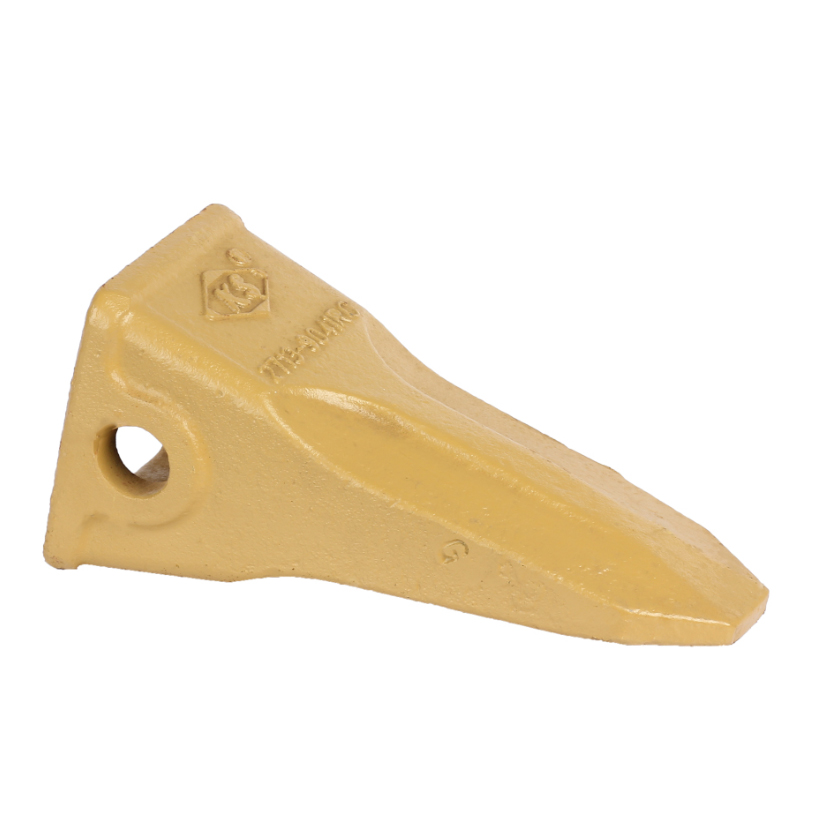
Operating in high-abrasion environments requires specific metallurgical defenses. You must specify wear resistant excavator bucket teeth to protect the bucket lip and structural welds. Standard teeth will wear down to the adapters quickly in silica sand or granite. Once the adapters are exposed, the bucket itself begins to wear. Replacing a bucket is a major capital expense. Replacing teeth is a standard operating procedure. Tooth profiles also matter. Twin tiger teeth offer maximum penetration in hard clay but wear out rapidly in abrasive sand. Standard dirt teeth offer more wear material but less penetration.
GET Profile
Primary Function
Ideal Soil Condition
Wear Characteristic
Standard Dirt
General excavation and loading.
Topsoil, loose dirt, light gravel.
Balanced wear, good overall lifespan.
Rock Chisel
Prying and breaking hard materials.
Fractured rock, limestone, shale.
High impact resistance, blunt tip.
Tiger / Twin Tiger
Maximum penetration and frost breaking.
Frozen ground, hardpan clay.
Fast wear rate due to low surface area.
Heavy Duty Abrasion
Maximum lifespan in sliding friction.
Silica sand, abrasive gravel pits.
Thick wear material, poor penetration.
Undercarriage Components
Tracked machinery operates in a continuous friction environment. Excavators, bulldozers, and crawler cranes rely on complex undercarriage systems to move. The primary components include track chains, bottom rollers, top carrier rollers, front idlers, and rear drive sprockets. These parts operate in dirt, mud, and sand, which act as grinding paste against the steel.
Critical replacement cycles depend heavily on the operating environment. A bulldozer pushing sand will wear out its undercarriage much faster than an excavator sitting stationary on a dirt pad. Uneven wear in one component accelerates wear across the entire system. If you install a new track chain on worn sprockets, the mismatched pitch will destroy the new chain rapidly. Mud packing in the recoil spring cavity artificially tightens the chain, accelerating bushing wear by up to 40%. Undercarriage components must be measured regularly using ultrasonic tools or specialized calipers to track wear percentages accurately.
Articulated Hauler and Heavy-Duty Truck Components
Site logistics and material transport vehicles face unique high-stress consumables. Articulated haulers carry massive payloads over uneven, unpaved terrain. This puts immense strain on their mechanical systems. Operating these vehicles under maximum payload requires strict adherence to replacement intervals. A blown tire or failed brake system on a loaded hauler poses severe safety risks and causes immediate operational bottlenecks.
Heavy-duty tires: Susceptible to sidewall cuts from sharp rocks and rapid tread wear from wheel slip. Ton-mile-per-hour (TMPH) ratings must match the site's haul road length and average speed.
Brake pads and shoes: Experience extreme heat cycles when descending steep grades with full payloads. Utilizing engine retarders extends brake life significantly.
Wheel bearings: Endure massive lateral forces during cornering and dumping operations. Contaminated grease leads to rapid spalling and bearing failure.
Suspension components: Struts and accumulators degrade from constant shock loading. Leaking nitrogen or hydraulic fluid indicates immediate replacement needs.
Specialized Mining and Excavation Components
Hard rock mining and compact soil excavation require specialized cutting tools. These environments push metallurgy to its absolute limits. Trenching tools and roadheader cutting picks must fracture solid rock without shattering. These picks utilize tungsten carbide tips brazed onto forged steel bodies. Premature failure usually occurs when the brazing fails or the steel body washes away, leaving the carbide insert unsupported.
Size reduction equipment, such as crushers and shredders, rely on internal wear plates, liners, and grates. These parts absorb the impact of raw material being crushed into smaller aggregates. Routine inspection intervals are mandatory. If a crusher liner wears completely through, the raw material will destroy the crusher's outer housing. Liners are typically cast from manganese steel. Manganese steel possesses a unique property: it work-hardens upon impact. The constant pounding of rocks increases its surface hardness while maintaining a ductile core. If used in pure abrasion without impact, manganese steel wears out rapidly.
Material Science and Evaluation Dimensions for Wear Parts
Understanding the basic metallurgy of consumable components allows buyers to make informed decisions. You cannot evaluate a part simply by looking at it. The true performance lies in its chemical composition and heat treatment process. Visual inspections only reveal casting flaws, not structural integrity.
Hardness vs. Toughness Trade-offs
Metallurgy involves a constant battle between hardness and toughness. Hardness is the material's resistance to abrasion and surface scratching, typically measured on the Brinell scale. Toughness is the material's resistance to impact, fracturing, and shattering, often measured by a Charpy V-notch test. Maximum hardness often sacrifices toughness. If you make a bucket tooth extremely hard, it becomes brittle. It will resist sand abrasion beautifully but will shatter the moment it strikes a solid rock. Conversely, a highly tough tooth will absorb rock impacts without breaking, but it will wear down rapidly in abrasive sand.
Evaluating Steel Alloys and Treatments
Different steel alloys serve different operational purposes. Heat treatment processes dictate how these alloys perform in the field. Quenching and tempering processes align the molecular structure of the steel to achieve the desired balance of hardness and ductility.
Material Type
Primary Characteristic
Ideal Application
Common Vulnerability
Boron Steel
Excellent hardenability and toughness balance.
Bulldozer cutting edges, grader blades.
Loses temper if exposed to excessive welding heat.
AR400 Steel
400 Brinell hardness; good formability.
Dump truck beds, standard wear liners.
Moderate wear in extreme abrasion.
AR500 Steel
500 Brinell hardness; highly abrasion resistant.
High-wear chute liners, rock bucket plates.
Prone to cracking under heavy impact.
Manganese Steel
Work-hardens under heavy impact.
Crusher jaws, cone mantles, blow bars.
Wears rapidly in low-impact, high-abrasion environments.
Tungsten Carbide
Extreme hardness; resists severe abrasion.
Roadmilling teeth, roadheader picks.
Brittle; requires strong steel backing and precise brazing.
Through-hardening versus surface-hardening is a critical distinction. Surface-hardened parts have a hard outer shell but a soft inner core. Once the shell wears away, the part degrades rapidly. Through-hardened parts maintain consistent hardness from the surface to the core, providing predictable wear rates throughout their entire lifespan.
Matching Materials to Mining Machinery Applications
You must map material specifications directly to your site conditions. mining machinery applications vary wildly based on geology. A quarry blasting limestone requires high-impact alloys capable of absorbing heavy shock loads. A sand and gravel pit requires high-abrasion alloys capable of resisting constant sliding friction. Installing the wrong metallurgical profile guarantees premature failure. Always audit the primary geological material on your site before ordering bulk replacement parts. Using a rock chisel tooth in loose topsoil wastes the machine's breakout force, while using a standard dirt tooth in fractured granite guarantees a shattered tip within hours.
OEM vs. Aftermarket: Conceptual Trade-Offs and Value Factors
The debate between Original Equipment Manufacturer (OEM) parts and aftermarket alternatives dominates procurement strategies. Both categories offer distinct advantages and carry specific risks. Understanding these nuances helps optimize maintenance budgets without compromising reliability.
The OEM Premium
OEM parts carry the brand name of the machine manufacturer. Purchasing OEM components provides guaranteed fitment. You do not have to worry about bolt hole alignments, pin diameters, or adapter tolerances. OEM parts also ensure warranty compliance. If your machine is under a factory warranty, using non-OEM parts can void coverage on related structural components. Furthermore, OEM parts offer predictable baseline performance. You know exactly how many hours a factory tooth will last because it matches the original machine specs perfectly.
The Aftermarket Landscape
The aftermarket sector is highly fragmented. Differentiating between premium aftermarket manufacturers and white-label budget imports prevents costly mistakes. Premium aftermarket companies often re-engineer parts to exceed OEM specifications for specific applications. They might add more wear material to high-friction zones, alter the tooth profile for better penetration, or use superior steel alloys containing higher levels of Chromium and Molybdenum. These premium options frequently outlast factory components.
Conversely, white-label budget imports compete solely on initial purchase price. These parts often feature inconsistent heat treatments, poor casting quality, and incorrect dimensional tolerances. Using budget imports introduces severe operational risks. A poorly cast tooth can snap off and jam a rock crusher, causing massive secondary damage that halts the entire production plant.
Risk Mitigation in Procurement
Establish strict criteria for when to use OEM versus aftermarket parts. Strictly use OEM components during active warranty periods. OEM is also recommended for complex proprietary assemblies, such as hydraulic pumps or computerized fuel injectors. Premium aftermarket is financially and operationally superior for bulk GET consumables. Items like cutting edges, bucket teeth, and undercarriage shoes are ideal candidates for high-quality aftermarket sourcing. This strategy balances risk while maximizing budget efficiency.
How to Vet a Heavy Equipment Wear Parts Supplier
Your equipment is only as reliable as your supply chain. Partnering with a vetted heavy equipment wear parts supplier mitigates the risks of extended downtime and substandard metallurgy. Vetting requires looking beyond the sales brochure and examining the supplier's operational capabilities.
Assessing Inventory and Lead Times
Evaluate a supplier's ability to maintain local stock of critical components. Global supply chain disruptions can delay international shipments for months. If your primary excavator loses a bucket tooth and your supplier has a six-week lead time, your production halts. A reliable supplier maintains regional warehouses stocked with high-turnover items. Ask potential vendors for their average order fulfillment times and their backorder resolution protocols. Local stocking distributors provide a massive advantage over direct overseas shipping when emergency breakdowns occur.
Quality Control and Traceability
Do not take metallurgical claims at face value. Instruct your purchasing department to request specific documentation from potential vendors. Ask for metallurgical certifications that prove the chemical composition of the steel. Request ISO 9001 compliance documentation to verify their manufacturing processes. Demand batch testing records that show the hardness and impact ratings of the specific production run you are buying. Traceability ensures that if a part fails prematurely, the supplier can identify the exact casting batch and rectify the issue.
Avoiding Common Purchasing Mistakes
Procurement errors happen when buyers prioritize speed over accuracy. Avoid these common pitfalls by implementing a standardized ordering checklist:
Visual Matching: Buying based solely on visual matching or basic dimensions is dangerous. Two parts may look identical but possess entirely different material grades. Always verify the part number.
Ignoring Manuals: Referencing exact machine serial numbers is mandatory. Equipment manufacturers update part designs frequently. A 2020 model may use a different adapter pin system than a 2018 model. Consult OEM part manuals to ensure exact fitment.
Counterfeit Risks: Warn your team against the dangers of counterfeit parts entering the supply chain through unverified third-party dealers. Counterfeits mimic OEM branding but use inferior, brittle metals that shatter under load.
Ignoring Operating Conditions: Ordering the exact same part for a machine moving from a dirt site to a rock quarry ignores the change in geological stress. Always update the part specification to match the new environment.
Conclusion
Audit your fleet's current ground engaging tools and undercarriage systems to identify specific machines experiencing premature component failure. Request metallurgical certifications and batch testing records from your existing vendors to verify you are receiving the steel grades you paid for. Cross-reference your equipment serial numbers with OEM parts manuals before placing your next bulk order to eliminate fitment errors. Initiate a 500-hour pilot test using upgraded, application-specific alloys on a single high-use machine to establish a new performance benchmark.
FAQ
Q: How often should excavator bucket teeth be replaced?
A: Replacement intervals depend entirely on the material being excavated. In highly abrasive silica sand, teeth may require replacement every 50 to 100 hours. In standard topsoil, they can last over 500 hours. Replace them before the wear reaches the adapter to prevent structural bucket damage.
Q: What is the difference between AR400 and AR500 steel in wear plates?
A: The numbers represent the Brinell hardness scale. AR400 has a nominal hardness of 400 BHN, offering a good balance of formability and impact resistance. AR500 is harder (500 BHN) and provides superior abrasion resistance, but it is more brittle and susceptible to cracking under heavy impact.
Q: How can I tell if an undercarriage sprocket is worn out?
A: Visually inspect the sprocket teeth. New teeth have flat, thick tips. Worn teeth become sharp and pointed, resembling a circular saw blade. You may also notice the track chain slipping or popping during operation, which indicates the pitch no longer matches the worn sprocket.
Q: How do I ensure exact fitment when ordering construction machinery wear parts?
A: Always use the exact machine make, model, and serial number. Consult the manufacturer's parts manual for the specific OEM part number. Provide this information to your supplier, as design changes frequently occur between production years of the same machine model.
Q: Are aftermarket wear parts as reliable as OEM?
A: Premium aftermarket parts can be as reliable, and sometimes superior, to OEM parts if they are engineered for specific applications. However, white-label budget aftermarket parts often lack proper heat treatment and quality control. Always vet the aftermarket manufacturer's metallurgical certifications.
Q: What factors cause premature failure in roadheader cutting picks?
A: Premature failure is typically caused by thermal shock, improper attack angles, or brazing failure. If the steel body wears away too quickly due to high abrasion, the tungsten carbide insert loses its structural support and snaps off during rock impact.
Q: How do I verify the quality of a heavy equipment wear parts supplier?
A: Request ISO compliance certificates, metallurgical batch testing records, and clear warranty policies. A reputable supplier will provide full traceability for their castings and maintain adequate local inventory to minimize your equipment downtime during replacements.